

Get to know Sri Lanka through its people, history, food and traditions, with a closer look at everyday life around the island.
Get to know Sri Lanka through its people, history, food and traditions, with a closer look at everyday life around the island.
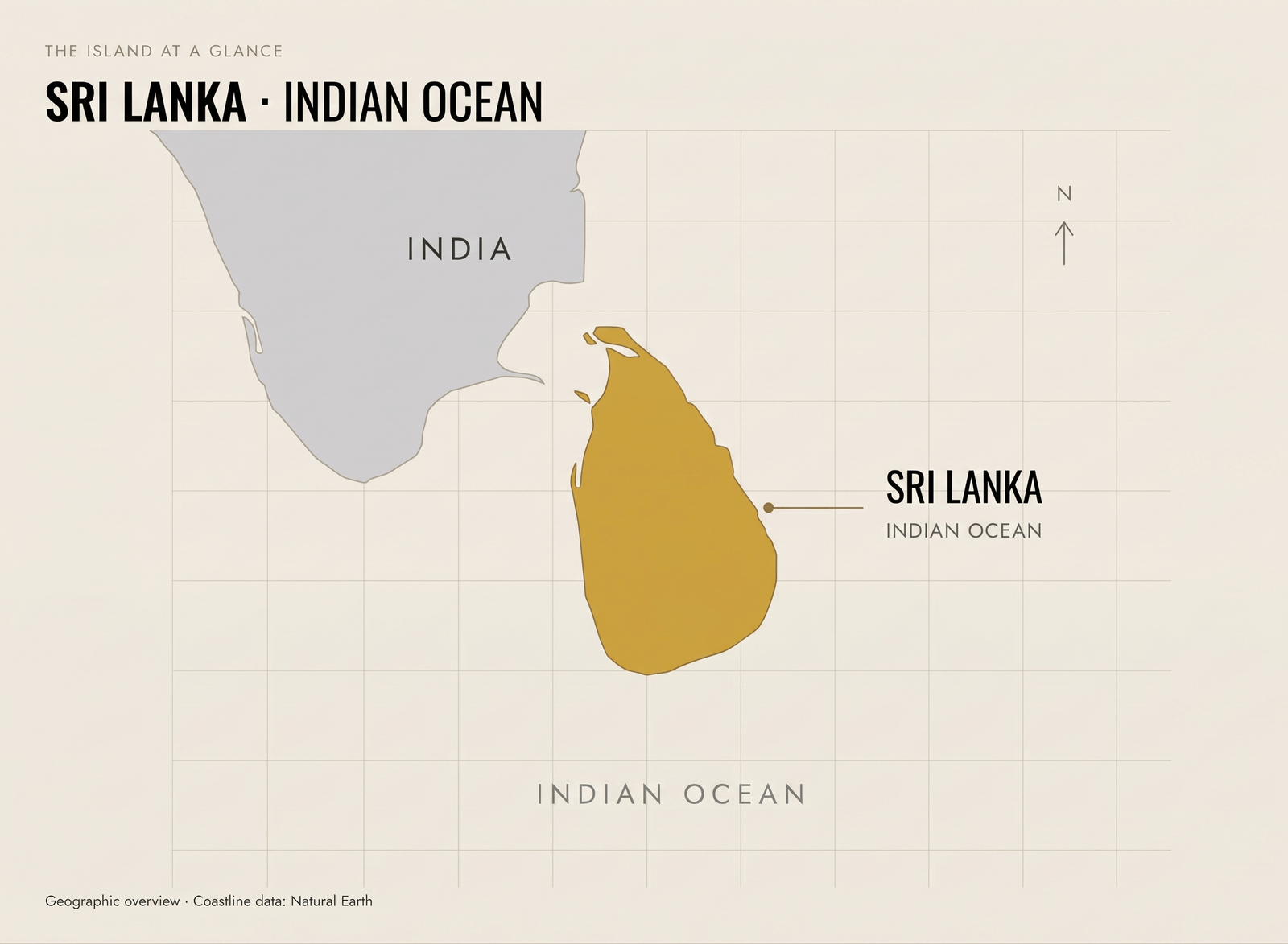
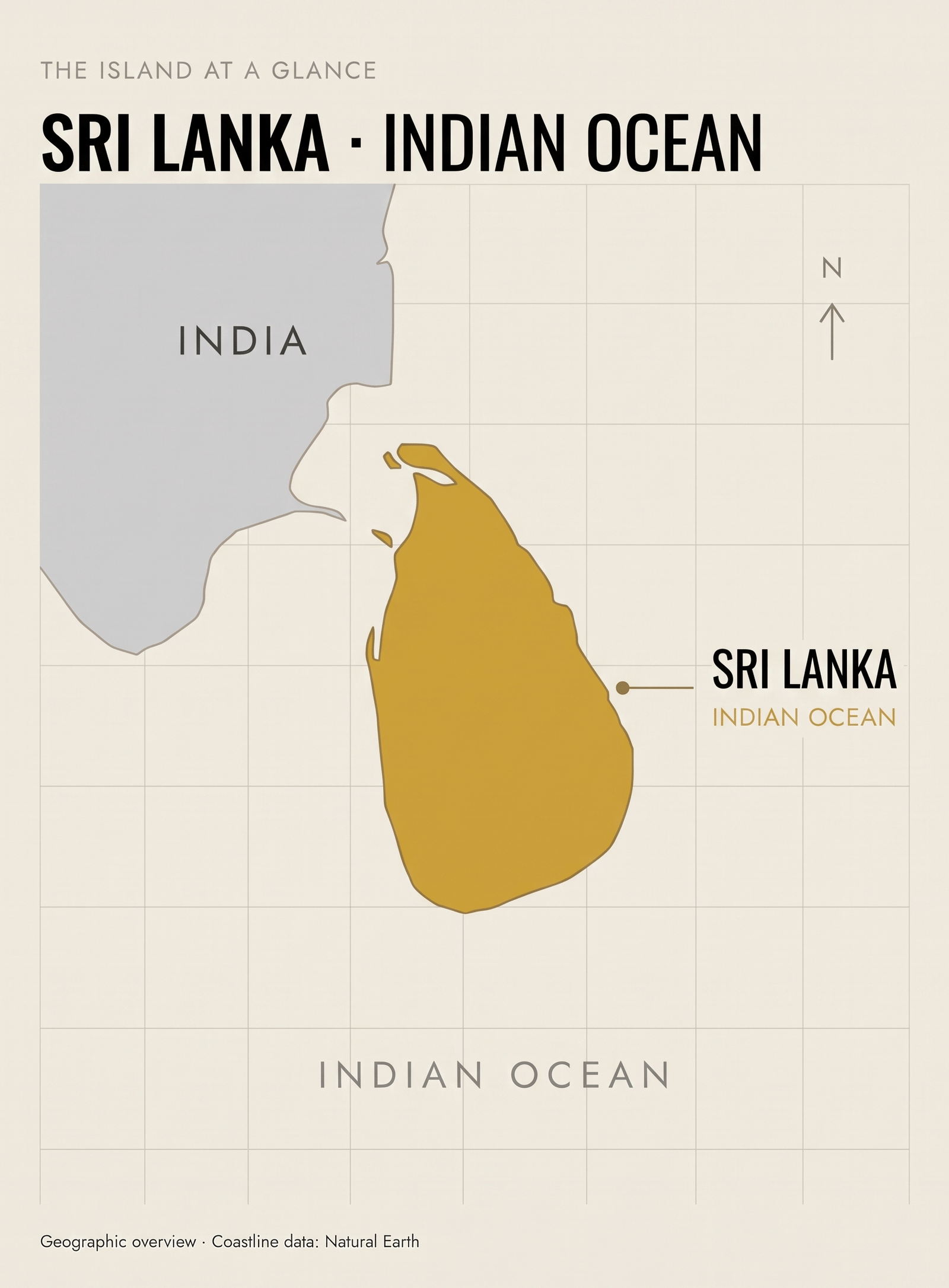
Sri Lanka lies in the Indian Ocean, just south of India. Across the island, landscapes, languages and everyday customs change from one area to another.
A tea estate, city neighbourhood, fishing harbour and family kitchen each offer a different view of Sri Lanka. These chapters explore the land, history, beliefs and traditions that shape life here.
Indian Ocean, south of India
Democratic Socialist Republic of Sri Lanka
Sri Jayewardenepura Kotte
Colombo
Sinhala and Tamil
English
Sri Lankan rupee · LKR
UTC +5:30
Pidurutalagala · 2,524 m
4 February 1948
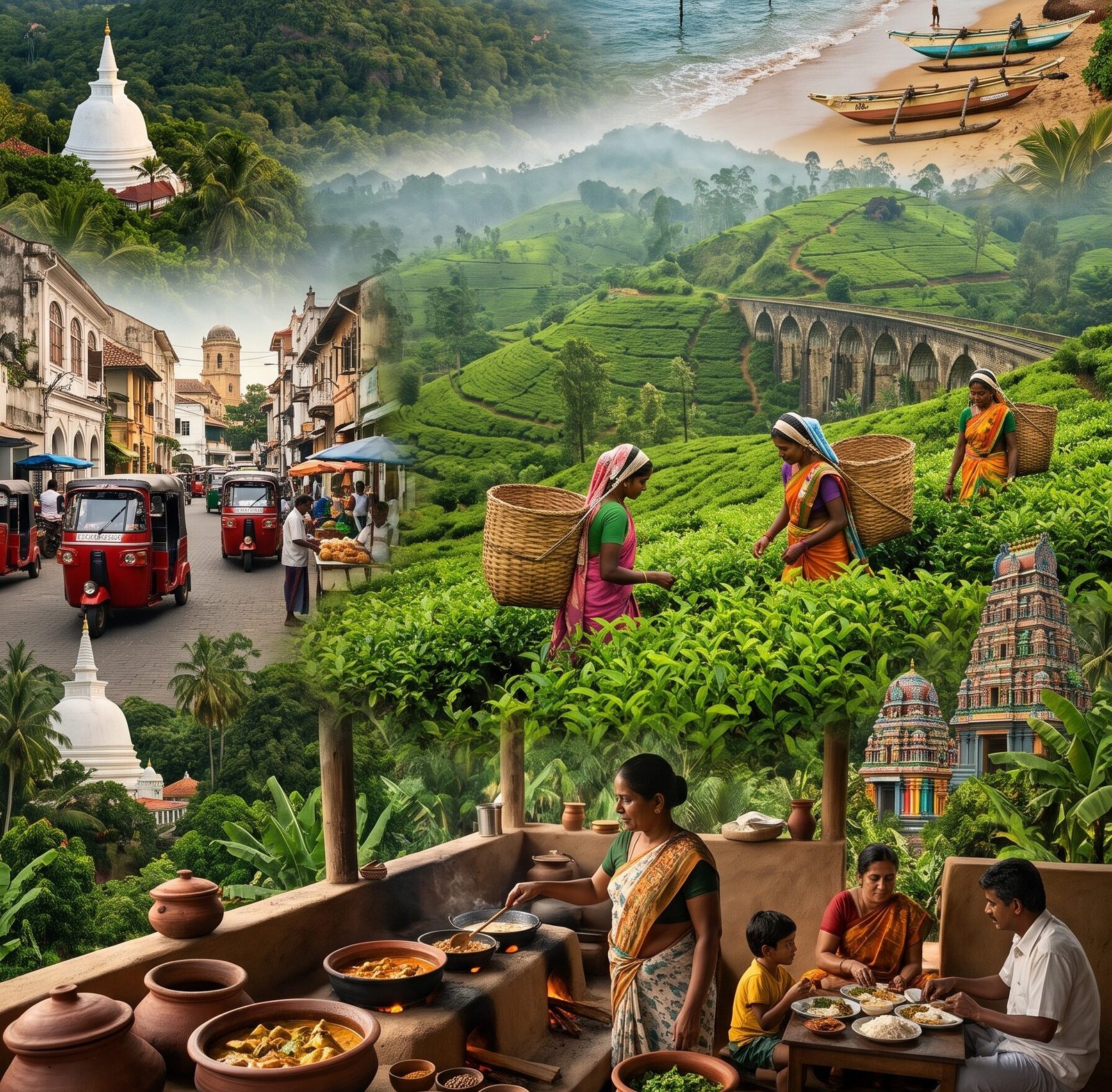
The island’s coast, lowland plains and central mountains have different climates, landscapes and ways of life.
Ancient reservoirs, religious buildings, port towns and plantation estates reveal different periods of Sri Lanka’s history.
Language, faith, family history and place all contribute to the country’s varied communities.
Temples, kovils, mosques and churches remain part of daily life. Many welcome visitors, with customs that deserve a little understanding.
Religious observances, family gatherings and public processions mark the year. Each has its own meaning and local traditions.
Rice, coconut, spices and seasonal produce form the basis of many meals. Recipes vary between communities, regions and family kitchens.
Learn how tea is grown and made, why one cup differs from another, and how spices contribute flavour beyond chilli heat.
Weaving, wax dyeing, lacework and carving require different materials and skills. Understanding the process makes the finished piece more interesting.
Sri Lanka’s performance traditions combine rhythm, gesture and costume. Their setting matters as much as what appears on a stage.
Courtyards, verandas and shaded rooms show how buildings respond to the climate. Older houses and contemporary design offer different interpretations.
The island’s gemstone heritage includes mining, cutting, polishing and jewellery making. There is much to learn before considering a purchase.
Rainforest, mountain forest, dry woodland, wetlands and coastal habitats support a wide variety of plants and animals.
Markets, railway stations, fishing harbours and neighbourhood shops reveal how people work, travel and spend their day.
Traditional skills continue alongside contemporary food, design and city life. The country’s present deserves as much attention as its past.
A few practical courtesies help when visiting homes, sharing a meal, entering a religious place or taking photographs.
Answers to common questions about food, language, customs and planning your visit.
This guide covers Sri Lanka’s history, culture, food and everyday life. For places to visit, see “Where Will Your Journey Take You?” on the Aviora homepage. The experiences section introduces activities you can include in a journey.
Yes. Ceylon is the country’s former official name. It became Sri Lanka when the country became a republic in 1972. You will still see Ceylon on tea labels, in older business names and in historical records.
No. English is widely used in tourism, but not everyone speaks it. Sinhala and Tamil are the official languages. Clear, simple sentences help, and your chauffeur-guide can translate when needed.
No. Some dishes are mild, while others contain plenty of chilli. Spices add flavour as well as heat. Tell the kitchen how spicy you like your food and ask for hotter accompaniments on the side.
Yes. Rice, vegetables, pulses and coconut feature in many dishes. Ask about the preparation, as a vegetable dish may still contain fish-based seasoning, dairy or eggs. Explain dietary requirements to the kitchen, including any concerns about shared equipment.
No. Monsoons, elevation and coastal exposure bring different conditions across the island. The coast can be warm while the hills feel cool on the same day. Use seasonal guidance for planning and check the local forecast closer to your visit.
Cover your shoulders and knees, and follow the temple’s instructions about shoes, hats and visitor access. Some sites have additional requirements. Check photography rules before taking pictures of shrines, worshippers or ceremonies.
Many public celebrations welcome spectators, while some rituals and spaces are reserved for the community. Confirm the current programme and visitor arrangements locally. Follow the host’s guidance and ask before joining a ceremony.
Let your travel curator know whether these visits interest you when planning the route. You can enjoy learning about a craft without making a purchase. If you choose to buy, ask who made the piece, what it is made from and what documentation is available.
Check immigration requirements with the relevant official authorities for your nationality and travel dates. Use current official information for transport schedules and other travel arrangements. This guide introduces the country’s culture and everyday life rather than providing live entry or service information.
Leave time to enjoy a meal, learn about a craft or stop for a conversation. Getting to know the people and everyday customs adds to your understanding of the places you visit.